UBIC

Altadena Fire Rebuild: What Insurance Doesn't Cover (And How to Plan For It)

What insurance doesn't cover in Altadena fire rebuilds. Scope gaps, drainage, structural issues. Free scope review for Eaton Fire homeowners.

10 min readFire Rebuild
Altadena Fire Rebuild: What Insurance Doesn't Cover (And How to Plan For It) — UBIC

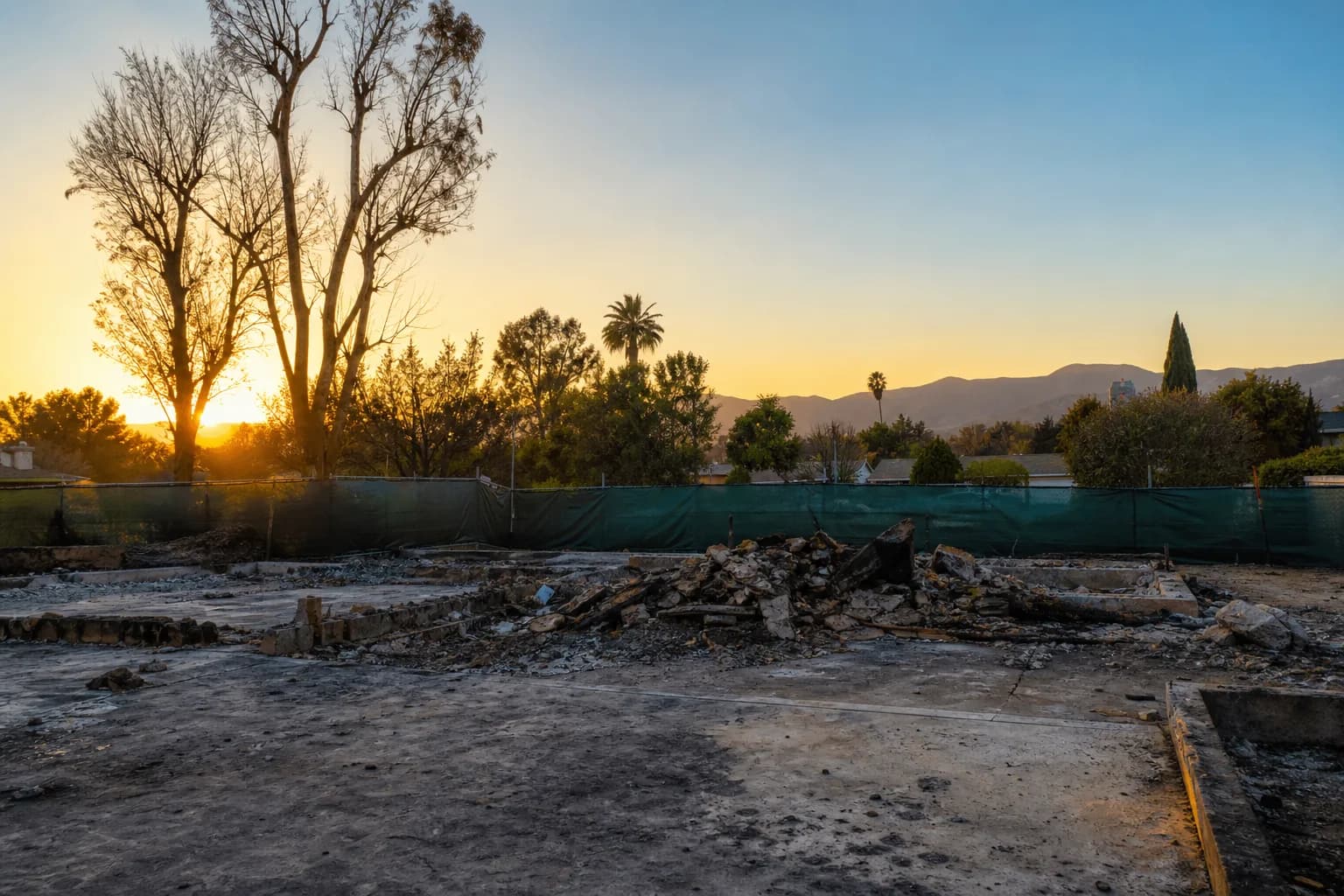
The Eaton Fire damaged and destroyed homes across Altadena. If yours was among them, your first instinct is the right one: file the insurance claim and plan the rebuild. Insurance arrives. Your adjuster provides a scope of work. You review it and think this seems complete.

It is not.

Most fire insurance scopes miss 15–40% of what actually needs to be rebuilt.

The gaps are not usually intentional. Insurance adjusters work quickly. They estimate based on formulas, not a site-specific assessment of your lot. They miss Altadena-specific challenges: hillside drainage, grading damage, foundation repairs, and water-intrusion prevention.

If you do not identify these gaps before construction, you will pay for them yourself. This guide walks through the most common insurance gaps in Altadena fire rebuilds and how to budget for them. For a full cost picture, see our breakdown of the cost to rebuild a home in Altadena after the Eaton Fire. If the payout is already short of the rebuild, read what to do when you are underinsured after a fire.

How your policy pays—actual cash value versus replacement cost—affects how much of a shortfall you can recover. The construction gaps below sit on top of that coverage-type question. They are the line items that never made it into the scope in the first place.

UBIC is a licensed California contractor (CA #1111731) specializing in custom homes and fire rebuilds in Los Angeles, with a focus on Altadena Eaton Fire recovery and Pacific Palisades Palisades Fire recovery. The ranges in this article are typical of Altadena hillside rebuilds, not a bid for any one lot.

The Most Common Insurance Gaps in Fire Rebuilds

Fire insurance coverage is written around the dwelling. An Altadena rebuild is a hillside project: soil, slope, water, code, and systems that a square-footage formula does not see. These six gaps are the ones Eaton Fire homeowners encounter most often when the insurance scope is compared with what the lot actually requires.

Gap #1: Grading & Drainage ($30K–$80K)

What insurance covers is a simple sentence: rebuild the home to pre-fire condition. What that sentence misses is the ground under the home. Fire destabilizes hillside grading. Water runoff changes. Proper drainage is what prevents later water intrusion and foundation damage.

Most Altadena homes sit on hillsides. Fire burns vegetation, destabilizes soil, and changes slope drainage patterns. Without proper grading and drainage, a newly rebuilt home sits on an unstable slope that is vulnerable to water damage.

The cost to fix this after the rebuild is $30K–$80K. It is expensive because it is corrective, not preventive. You are cutting into finished work instead of building the drainage in with the foundation.

The solution is to get a geotechnical engineer to assess hillside grading before reconstruction, then include proper drainage, retaining walls, and slope stabilization in the rebuild scope up front. Insurance usually does not cover this work because it is treated as site work, not structure.

Gap #2: Foundation & Structural Repairs ($25K–$100K)

What insurance covers: rebuild the foundation to code. What they miss: fire can damage concrete slabs, footings, and structural connections. Most adjusters estimate foundation costs based on square footage, not site-specific soil and foundation conditions.

Altadena sits on expansive soil—clay that shifts with moisture. Fire dries that soil. Then heavy rains cause swelling. If your foundation was not reinforced before the fire, the damage exposes weaknesses that now need correction, not a like-for-like pour.

The cost to fix this after the rebuild is $25K–$100K, covering structural engineers, foundation repairs, and reinforcement. Have a structural engineer assess the foundation before anyone bids the rebuild. Foundation damage often requires more reinforcement than the pre-fire condition.

Gap #3: Exterior Envelope & Waterproofing ($15K–$50K)

What insurance covers: replace walls, roof, windows, and doors. What they miss is the moisture system that holds those parts together. Fire damage affects roof underlayment and flashing that are not always visible on the initial estimate; window-frame seals and how they integrate with the wall; exterior caulking and sealants; and interior vapor barriers and moisture control.

Adjusters estimate based on surface damage. They miss the integrated moisture-management systems that prevent water intrusion. Altadena’s wet winters mean hillside homes develop water-intrusion problems easily. Proper waterproofing is critical on these lots, and insurance often underestimates this work.

The cost to fix it after you have moved in—once water starts appearing in the walls—is $15K–$50K. Include comprehensive waterproofing in the rebuild scope: modern roof underlayment, flashing, caulk, vapor barriers, and drainage planes. This costs more up front but prevents expensive water damage later.

Gap #4: Mechanical Systems Reconstruction ($20K–$60K)

What insurance covers: replace HVAC, plumbing, and electrical. What they miss is that fire damages systems inside walls, under floors, and in crawl spaces. The written scope does not always include the hidden work:

  • Complete ductwork replacement (often only “visible” ducts)
  • Plumbing-line replacement, especially underground and in-slab lines
  • Electrical conduit and rewiring
  • Ventilation and humidity-control systems
  • Gas-line replacement and safety certification

If those systems are discovered after the rebuild, the cost to fix them is $20K–$60K. Work with mechanical engineers during the scope review. Validate that all systems—visible and hidden—are included. Underground plumbing and electrical should be replaced entirely, not just “where visible.”

Gap #5: Site Restoration ($10K–$40K)

What insurance covers: the structure, and maybe some hardscape. What they miss adds up quickly:

  • Retaining walls
  • Fencing
  • Landscape restoration
  • Driveway and parking-area restoration
  • Exterior lighting
  • Grading for proper water drainage away from the home

These costs add up fast but are often treated as “not necessary for habitation” by insurance. Include site restoration in the rebuild scope. It is part of making the home livable and preventing future damage. On a hillside lot, leftover grade and missing retaining walls are how water finds the foundation.

Gap #6: Code Upgrades ($15K–$50K)

What insurance covers: rebuild to current code. What they miss is that fire-code updates for fire-damaged properties often require more than a generic “to code” line:

  • Fire-resistant roofing materials (Class A only)
  • Metal gutters, not vinyl, which melts in a future fire
  • Tempered windows in specific locations
  • Fire-resistant siding in some Altadena zones
  • Updated HVAC efficiency standards
  • Electrical-system upgrades if the pre-fire system was outdated

Insurance estimates do not always include these upgrades. You will discover them during permitting. The cost is $15K–$50K, and it is non-negotiable with the city. Review Altadena Building & Safety code requirements for fire-damaged properties before you finalize the rebuild scope, and build these upgrades into the budget from the start.
Total Insurance Gaps in a Typical Altadena Fire Rebuild

Add the six gaps together and the pattern is consistent. Insurance writes a structure-focused scope. The lot, the soil, the envelope, the hidden systems, the site, and the current code add a second budget. The table below uses typical Altadena fire-rebuild ranges.

Item Insurance Coverage Actual Need Gap
Grading & Drainage $0–10K $30–80K $20–80K
Foundation & Structural $20K $45–100K $25–80K
Exterior Envelope $40K $55–90K $15–50K
Mechanical Systems $50K $70–110K $20–60K
Site Restoration $5K $15–45K $10–40K
Code Upgrades $10K $25–60K $15–50K
TOTALS $125K $240–485K $115–360K
Insurance scope: $125K. Actual rebuild need: $240K–$485K. Your gap: $115K–$360K.

This is why insurance coordination matters. The gap between insurance scope and actual rebuild need can exceed $200K. That number is not an argument for panic. It is an argument for reading the scope as a starting document, not as the construction budget.

How to Close the Gap

You close insurance gaps before you pour, not after you move in. The sequence is assessment, code, documentation, then a realistic owner budget for whatever the carrier still will not carry.

Step 1: Comprehensive Site Assessment ($2K–$5K)

Before you finalize the insurance scope, hire professionals to look at the lot, not just the paperwork:

  • Structural engineer: foundation and structural damage
  • Geotechnical engineer: hillside grading and soil stability
  • MEP engineer: complete mechanical-system damage (visible and hidden)
  • Fire restoration specialist: overlooked fire damage and restoration needs

Those assessments cost $2K–$5K. The return is $50K–$200K in identified scope gaps. This is the best $5K you will spend on the rebuild.

Step 2: Code Review ($1K–$2K)

Contact Altadena Building & Safety, or work with a permit specialist, to identify all code requirements for your fire-damaged property. Code changes include fire-resistant materials, electrical-system upgrades, HVAC efficiency standards, and grading and drainage requirements. Include these in your scope before you rebuild, not after.

A code review in this range ($1K–$2K) is inexpensive compared with discovering a Class A roof or metal-gutter requirement after the bid is signed.

Step 3: Insurance Negotiation

Present your professional assessments to your insurance adjuster. Be specific: our structural engineer identified foundation issues that require additional work. Our grading assessment shows the hillside is unstable. These are not cosmetic—they are necessary for a safe rebuild.

Insurance often approves upgrades when they are professionally documented. You will recover $20K–$150K in additional scope coverage if you present documented evidence. UBIC can provide contractor-backed scope review and construction documentation; we are not a public adjuster or an insurance attorney, and we do not negotiate claim settlements. An insurance rebuild contractor in Altadena belongs in the construction lane: line items, photos, and what the lot actually requires.

Step 4: Budget for the Gap

If insurance will not cover the remaining gap, you still need to budget for it. On a $250K insurance scope, budget an additional $50K–$100K for gaps. This is not failure. It is reality. Every fire rebuild has gaps.

The Risk of Ignoring Insurance Gaps

The other path is rebuilding strictly to the insurance scope and hoping the lot cooperates.

  1. Year 1: water appears in the walls (waterproofing gap). Cost: $30K to fix.
  2. Year 2: foundation issues emerge as soil settles (foundation gap). Cost: $50K to fix.
  3. Year 3: drainage fails; the hillside erodes near the home (grading gap). Cost: $60K to fix.

Total gap fixes: $140K over three years. Compare that with addressing the same gaps up front at about $100K during the rebuild. It is cheaper to fix it right the first time, while the walls are open and the grade is still a construction site.

A Contractor Who Knows Fire Rebuild Insurance

This is why working with a contractor who specializes in fire rebuilds matters. They know what insurance typically misses. They coordinate with adjusters to approve documented scope upgrades. They hire the right engineers to identify hidden damage. They include code requirements in the rebuild scope. They budget for realistic gaps. They prevent expensive post-rebuild surprises.

A generic contractor will rebuild to the insurance scope and leave you holding the bag for $100K or more in unforeseen costs. A fire rebuild specialist plans for those costs while the claim is still open.

UBIC’s fire-rebuild work in Altadena and Pacific Palisades is led by founder Mark Iskandar, with project manager Georges Khoury, superintendent David Linares, and operations lead Susan Almaraz. The team’s job on an Eaton Fire rebuild is to compare the insurance estimate with the slope, the soil, the envelope, and the permit path, then build the home that actually belongs on the lot. Learn how we structure that work on our fire rebuild program.

Next Steps: Get Your Scope Reviewed

If your Altadena home was damaged in the Eaton Fire, do not treat the first insurance scope as the construction plan. Work the sequence in order:

  1. Get your insurance scope.
  2. Get a free scope review with UBIC.
  3. We will assess what is missing.
  4. We will coordinate with your adjuster for coverage, with construction documentation you can share.
  5. We will budget for realistic gaps.
  6. We will rebuild your home completely.

Do not rebuild based on an incomplete insurance scope. Get a professional assessment first. A free scope review is available for Eaton Fire homeowners who want the gaps named before construction starts.

FAQ

Processquestions.

The most common misses are grading and drainage, foundation and structural repairs beyond a square-footage estimate, exterior waterproofing (underlayment, flashing, seals, vapor barriers), hidden mechanical work (ducts, in-slab plumbing, conduit, gas lines), site restoration, and code upgrades such as Class A roofing and metal gutters. Insurance usually covers rebuilding the structure to pre-fire condition or “to code.” Altadena hillside lots need site work, soil work, and moisture control that a formula-based scope often skips. Those skips are how a 15–40% hole appears in the real rebuild.

Most fire insurance scopes miss 15–40% of what actually needs to be rebuilt. On a typical Altadena fire rebuild, that can mean an insurance scope around $125K against an actual need of $240K–$485K—a gap of $115K–$360K. The gap between insurance scope and actual rebuild need can exceed $200K. The miss is usually speed and method, not a decision to deny the lot: adjusters estimate from formulas, not a geotechnical and structural read of your hillside.

Insurance usually treats grading and drainage as “site work,” not “structure.” The written coverage is to rebuild the home to pre-fire condition. Fire still burns vegetation, destabilizes soil, and changes slope drainage on Altadena hillsides. Without proper grading, drainage, retaining walls, and slope stabilization, the new house sits on an unstable slope. Fixing that after construction is $30K–$80K because the work is corrective. A geotechnical assessment before reconstruction is how you get it into the scope while it is still preventive.

Line by line, typical gaps run $20K–$80K for grading and drainage, $25K–$80K for foundation and structural work, $15K–$50K for the exterior envelope, $20K–$60K for mechanical systems, $10K–$40K for site restoration, and $15K–$50K for code upgrades. Together, the table totals a $115K–$360K gap on a $125K insurance scope. If you ignore the gaps and repair them after move-in, three years of water, foundation, and drainage fixes can run about $140K, versus about $100K if you address the same work during the rebuild.

A “rebuild to current code” line does not always include the upgrades permitting will require. Fire-damaged properties often need Class A roofing, metal gutters instead of vinyl, tempered windows in specific locations, fire-resistant siding in some Altadena zones, updated HVAC efficiency, and electrical upgrades if the pre-fire system was outdated. Those items are commonly found during permitting, cost $15K–$50K, and are non-negotiable with the city. Review Altadena Building & Safety requirements before you lock the rebuild scope. Documented code needs can sometimes be added to coverage; if not, they belong in the owner gap budget.

Spend $2K–$5K on a comprehensive site assessment before the scope is final: a structural engineer for foundation and structure, a geotechnical engineer for hillside grading and soil, an MEP engineer for visible and hidden mechanical systems, and a fire restoration specialist for overlooked damage. Follow that with a $1K–$2K code review through Altadena Building & Safety or a permit specialist. Present the reports to the adjuster with specific, safety-based language. Documented evidence often recovers $20K–$150K in additional scope. The assessment return is typically $50K–$200K in identified gaps.

You rebuild the box of the house and leave the lot’s real conditions for later. Year 1, water appears in the walls because waterproofing was estimated from surface damage—about $30K to fix. Year 2, foundation issues emerge as expansive clay settles—about $50K. Year 3, drainage fails and the hillside erodes near the home—about $60K. That is $140K over three years, against about $100K if the same work is done during reconstruction. A generic contractor who builds only to the insurance scope can leave you holding $100K or more in unforeseen costs.

Yes. A free scope review is available for Eaton Fire homeowners. UBIC is a licensed California contractor (CA #1111731) specializing in Altadena and Pacific Palisades fire rebuilds. We compare the insurance scope with the lot, identify missing grading, structural, envelope, mechanical, site, and code work, provide construction documentation you can share with your adjuster, and budget for realistic remaining gaps. We are not a public adjuster or insurance attorney. If you want that review, get your insurance scope first, then ask UBIC to walk the gaps before construction starts.

Ready to rebuildwith clarity?

Schedule a free planning session for your fire rebuild, or call us directly.