Eaton Fire Rebuild Progress: Latest Recovery Snapshot
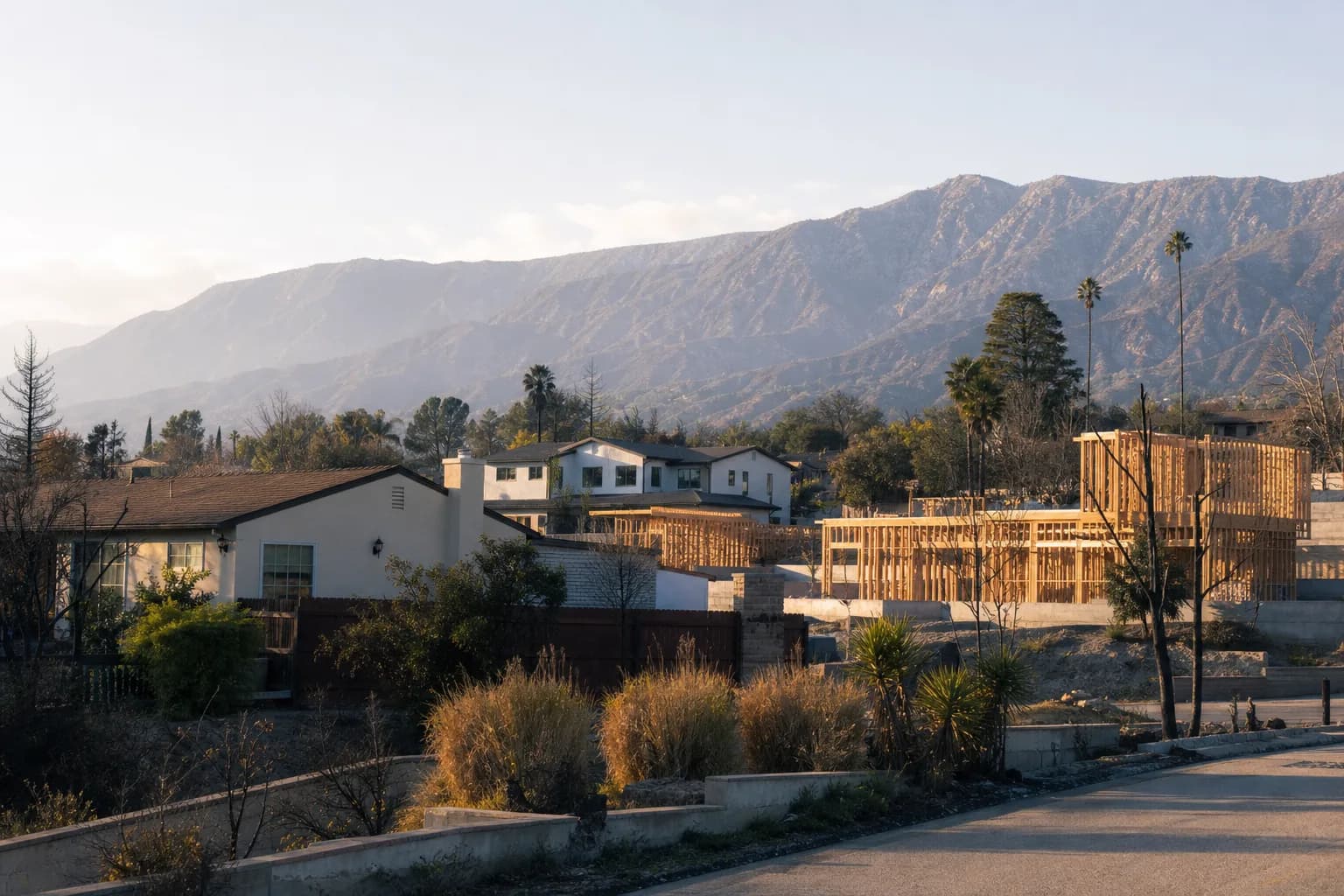
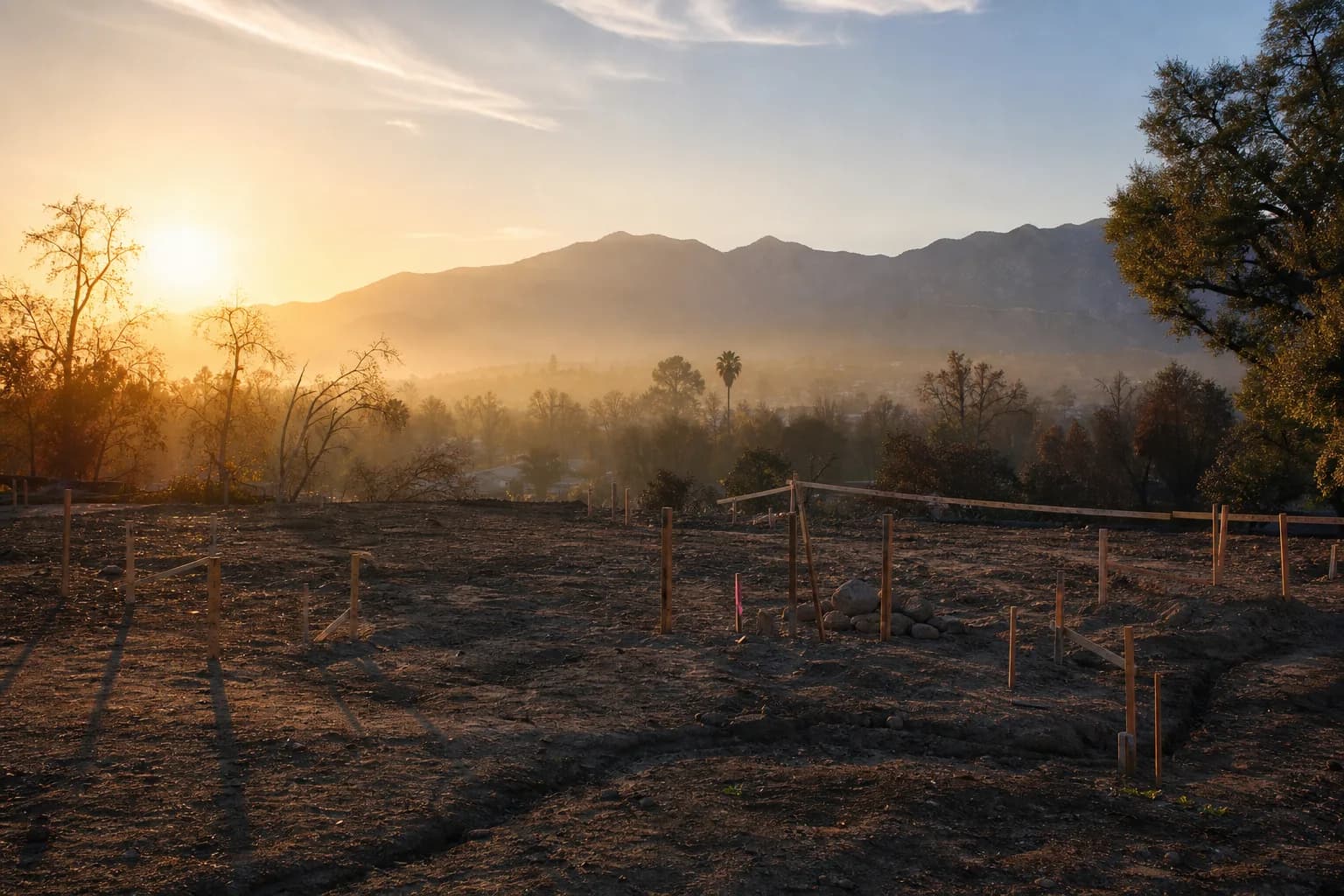
Altadena recovery is moving forward, but progress remains uneven. UCLA research found that roughly 30% of severely fire-damaged Altadena homeowners had taken an observable recovery step by late summer 2025, such as filing a permit, listing, or selling.
Later public reporting found that roughly half of homeowners who lost homes had applied for rebuilding permits or sold their properties, while many others were still navigating insurance delays, high construction costs, permitting complexity, and the challenge of turning an approved plan into actual construction.
A few patterns are worth understanding when you read any “progress” number:
[Need help turning recovery paperwork into a buildable plan? UBIC can review your fire rebuild path.]
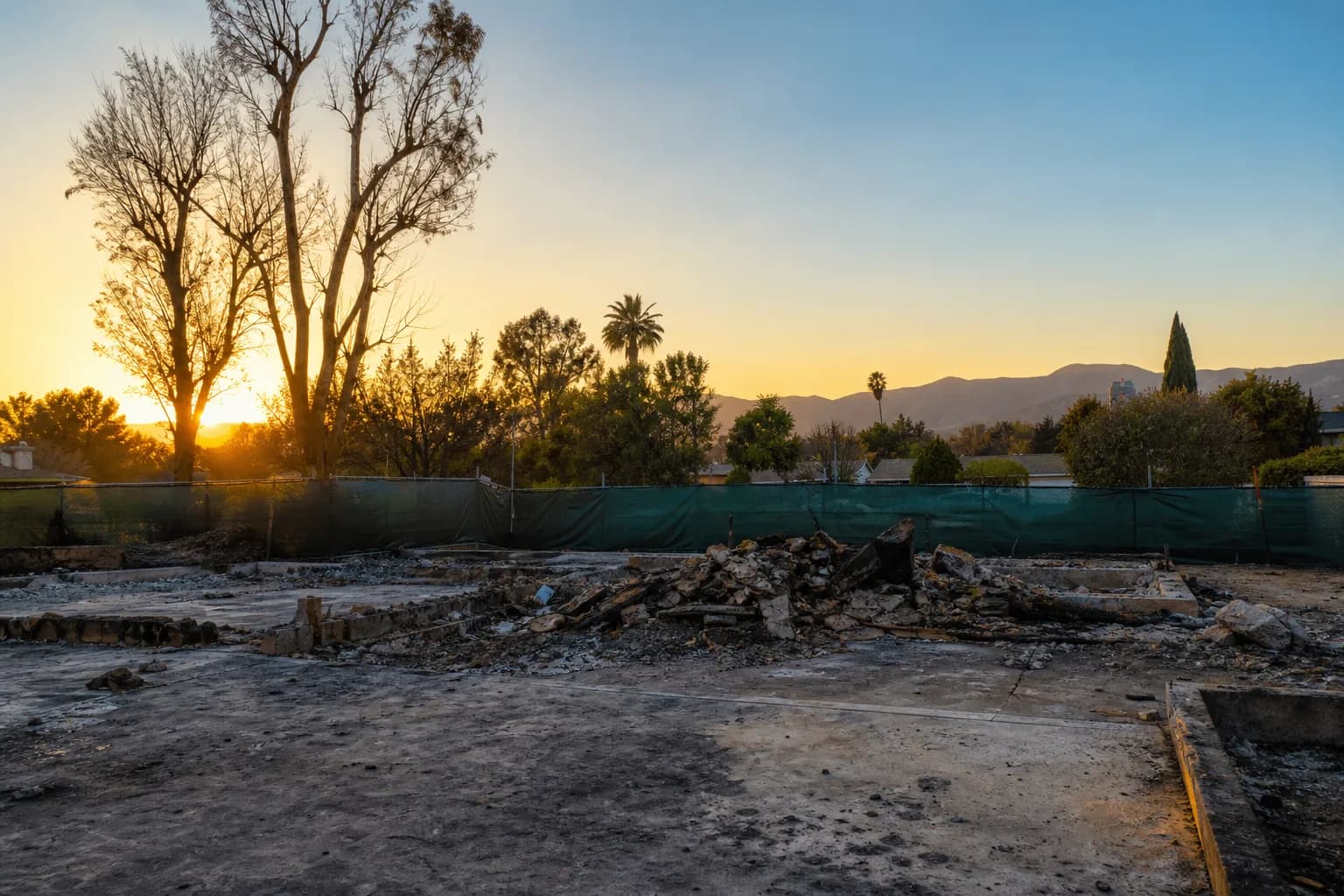
A full LA fire rebuild is not the same as a standard remodel. Homeowners may need to address debris clearance, site safety, foundation condition, structural engineering, updated code requirements, fire-resilient materials, utility reconnection, insurance documentation, permits, inspections, and construction sequencing.
What Homeowners Should Know About LA Fire Rebuilds in 2026
For Eaton Fire and Altadena recovery specifically, homeowners should expect the process to move in stages. Some people are still working through insurance and documentation, while others are already filing permits, reviewing plans, or starting construction.
Two realities shape almost every Altadena rebuild conversation. The first is the insurance gap. Across both fire areas, a large share of homeowners turned out to be underinsured or uninsured. Many policies were written to reflect what a home was worth, not what it costs to rebuild to current code in 2026.
Builders and attorneys working in Altadena commonly describe homeowners coming up roughly 15–20% short of what a rebuild actually costs, and in higher-cost areas the gap between an insurance payout and a buildable number can be far larger. Many Altadena homes were also owned for generations, which made underinsurance more common and the loss more personal.
The second is that the Eaton Fire behaved more like an urban fire than a wilderness wildfire. Because of how densely it burned through older housing stock, homes that survived can still carry contamination, and properties may require environmental testing for materials such as asbestos, lead, and arsenic before work proceeds.
Remediation of those materials is regulated and can add time and cost. UBIC coordinates specialized testing, remediation, and hazardous-material clearance should be handled by the appropriate licensed professionals.
Who Handles Complex Fire Rebuilds in Los Angeles?
Some homeowners are also weighing financing options such as SBA disaster loans , and many face pressure from expiring loss-of-use coverage and the end of mortgage forbearance periods. These are personal financial decisions; UBIC is not a financial or legal advisor and can only speak to the construction side of the rebuild.
Complex fire rebuilds require a licensed general contractor specializing in ground-up residential reconstruction instead of basic remodeling. Starting from scratch means stacking multiple disciplines including a surveyor, architect, structural engineer, soils engineer, and permit expediter. Because this coordination is where projects either clear review or stall, hiring a unified design-build team that handles all of these moving parts under one roof is highly effective.
Homeowners should also note that fully licensed general contractors in Southern California are in shorter supply than many assume. Furthermore, insurers and mortgage companies almost always require a CSLB licensed contractor before releasing rebuild funds.
If you are dealing with major structural damage, UBIC provides fully licensed, turnkey project management teams to oversee high-end residential reconstruction from demolition to final inspection.
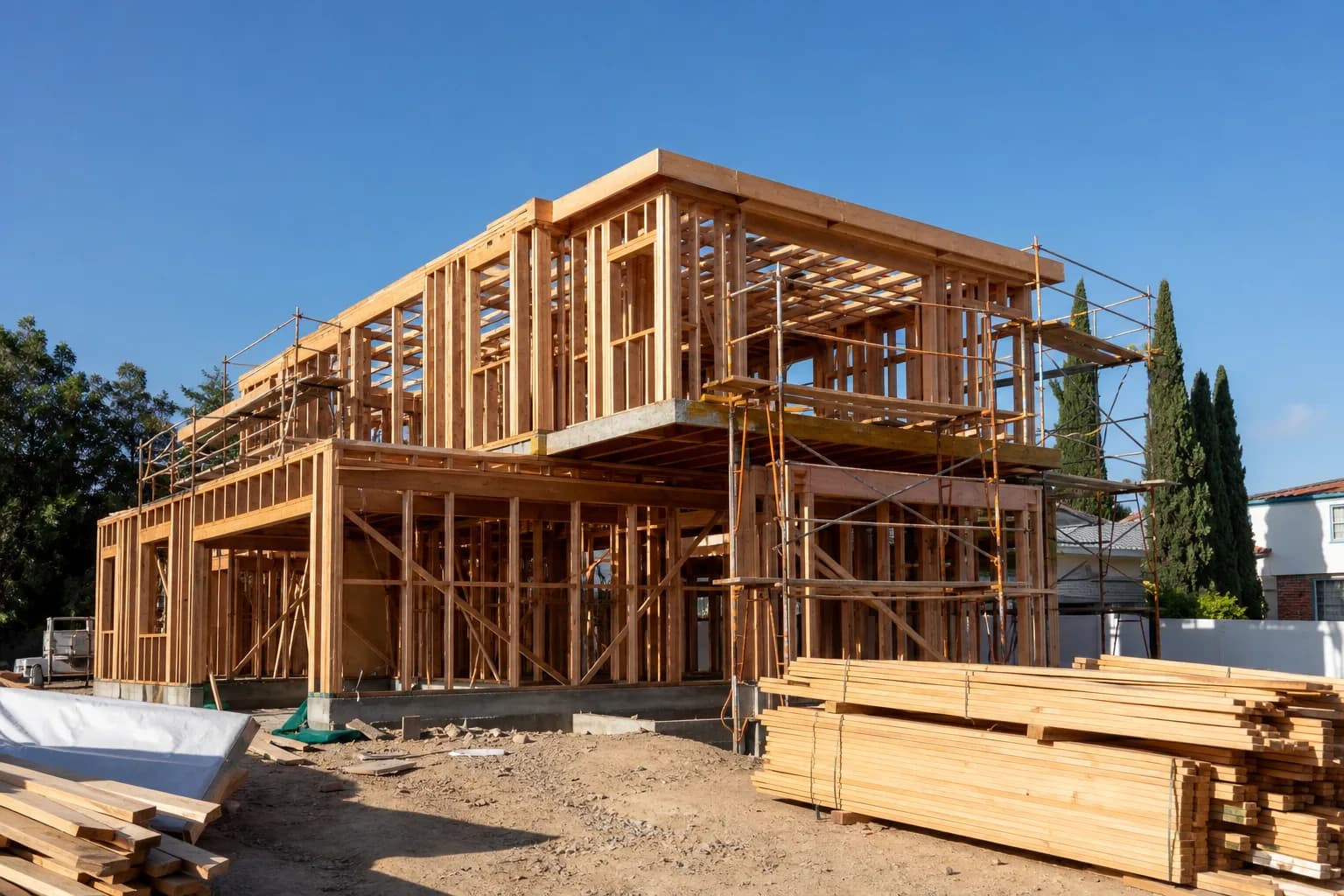
A turnkey fire rebuild gives homeowners one coordinated construction path instead of forcing them to manage every trade, document, and deadline alone. UBIC can help organize the construction side of the rebuild, from early scope review through final delivery.
Turnkey LA Fire Rebuild Services
Turnkey rebuild support may include:
A coordinated team helps manage sequencing risk, which is where many rebuilds lose time. When a single trade slips, such as a plumber moving to another job or a rescheduled inspection, the delay can cascade through every trade behind it. This vulnerability can easily turn a brief one or two week slip into months of stagnation. Managing that tightly scheduled sequence across the entire project lifespan is exactly what a turnkey contractor is hired to handle.
Permit requirements depend on the jurisdiction, property, scope, damage level, and rebuild path. A like-for-like rebuild may follow a different review path than a redesigned or expanded custom home.
Properties in hillside areas, Fire Hazard Severity Zones, geological hazard areas, or areas with water-flow or wastewater concerns may require additional review. LA County recovery permit guidance specifically flags these categories as potential factors in the rebuild permit process.
Jurisdiction matters a great deal. The City of Los Angeles created an expedited path for rebuilds that stay within roughly 110% of the original square footage. Builders have reported that conforming like-for-like plans can clear review noticeably faster on that path.
What Permits Are Needed for LA Fire Rebuild Projects?
The LA County process for Altadena has been more uneven because much of the plan review is handled by third-party reviewers. Homeowners and contractors have described confusion over document access and review status through the county online system. Plan ahead for the possibility that a county review runs longer than a comparable city review.
A few items frequently catch homeowners by surprise:
[Review your permit and ground up construction path with UBIC.]
In many cases, yes, but the rebuild path depends on the level of damage, foundation condition, environmental clearance, structural safety, insurance coverage, zoning, code requirements, and homeowner goals. Some fire-damaged homes can be repaired while others require full demolition and ground-up reconstruction.
A contractor should not promise a rebuild path without reviewing the property first. Severe fire damage may require structural engineering, foundation review, hazardous material clearance, and local inspections before final construction planning.
Can My Los Angeles Home Be Rebuilt After Major Fire Damage?
In the Eaton Fire area specifically, older homes that survived can still need environmental testing. Even an intact-looking foundation should be evaluated by an engineer before anyone assumes it can be reused.
On complex or hillside lots, site work including grading, drainage, retaining walls, and deep caisson foundations can become the most expensive and time-consuming part of the project, sometimes costing more than the house itself.
One thing the recovery has made clear is that how you rebuild matters as much as whether you rebuild. No responsible builder will call a home fireproof, but homes can be made meaningfully more fire resistant. Many homeowners are choosing to rebuild to a higher standard than what burned.
Most homes in these fires did not ignite from a wall of flame. They ignited from embers finding a way in, often through attic vents and exposed eaves, and then burned from the inside out. That reality points to a few high value, resilience focused choices.
There is no single magic material, and resilience choices involve trade-offs in cost, workforce familiarity, and timeline. UBIC can help you weigh fire-resilient options against budget and design goals as part of preconstruction planning.
Fire-Resilient Rebuilding: Materials and Design Choices
A full fire rebuild in Los Angeles can vary widely based on square footage, site conditions, design complexity, structural requirements, finish level, and whether soft costs are included.
Public 2026 estimates for wildfire rebuilds in the Los Angeles area commonly range from roughly $350 to $800 or more per square foot, with luxury, hillside, custom, or complex rebuilds sometimes exceeding that range.
In higher cost coastal and Palisades area markets, builders have reported all-in numbers well above that, frequently reaching $900 to $1,400 per square foot once contractor overhead, site supervision, and general conditions are included, and climbing higher still for the most complex luxury work.
A critical point when comparing bids is that a low per-square-foot number often describes a shell rather than a finished, move-in-ready home. The same dollar-per-foot rate can quietly exclude soft costs, general contractor overhead, finish allowances, and site work, which is exactly where homeowners get surprised.
When you collect bids, read past the headline number and compare what is actually included line by line because one bid may include every light fixture and another none. It is also worth knowing that labor and trade availability has often been a bigger cost driver than materials in the affected zip codes, with reported surcharges ranging widely by trade.
What Does a Full Fire Rebuild in Los Angeles Cost?
For planning against insurance, many homeowners find their coverage lands somewhere in the range of $450 to $600 per square foot, which is why the gap to a real rebuild number is so common. Square-foot pricing is only an early planning tool. UBIC can provide a more accurate estimate after reviewing the property, scope, plans, site conditions, and finish expectations.
[Read our about us page and request an estimate for your lot.]
Choosing the right contractor is one of the biggest decisions in a fire rebuild. Homeowners should look for a licensed California contractor with experience in full residential reconstruction, structural work, design and engineering coordination, permits, inspections, and long project timelines.
California wildfire-recovery guidance recommends verifying any contractor’s license through the CSLB before hiring after a disaster.
The share of unlicensed contractors in Southern California is significant. A licensed contractor is often required before insurance proceeds or mortgage funds will be released. Many homeowners also find it worthwhile to work with a contractor who can support an accurate, well-documented insurance scope, since how an estimate is written can affect what an insurer ultimately pays.
How to Find an Experienced LA Fire Rebuild Contractor
[See our projects with full reconstruction experience.]
High-end fire rebuilds require more than replacing square footage. Luxury residential projects often involve custom architecture, specialty windows and doors, premium exterior materials, custom cabinetry, stone, tile, smart-home systems, advanced HVAC, outdoor living spaces, and careful sequencing of specialty trades.
UBIC can support high-end LA fire rebuilds with detailed preconstruction planning, design coordination, structural reconstruction, finish coordination, and project management from early scope through final walkthrough.
Luxury rebuild considerations:
Homeowners affected by the Eaton Fire should rely on official sources for permit status, recovery resources, fee waivers, and local rebuilding guidance. UBIC can help with construction planning, but county portals and licensed professionals should be used for official requirements.
High-End LA Fire Rebuilds for Luxury Residential Properties
UBIC helps homeowners plan and execute complex residential rebuilds after major fire damage. Our team can support the construction side of the process, from early site review and scope planning to engineering coordination, permits, structural reconstruction, finish work, and final walkthrough.
[Request an LA fire rebuild consultation.]
Complex fire rebuilds in Los Angeles are handled by licensed general contractors who specialize in structural residential reconstruction. Homeowners should choose a builder experienced in managing architects, engineers, city permits, and multi-year timelines.
You can find an experienced LA fire rebuild contractor by verifying their California license through the CSLB and reviewing their past full reconstruction projects. Homeowners should compare written estimates line by line and confirm the contractor can handle insurance scopes, as banks and insurers usually require a licensed professional before releasing rebuild funds.
A full fire rebuild in LA generally ranges from $350 to $800 or more per square foot based on local 2026 wildfire rebuild averages. Coastal, hillside, or luxury custom homes frequently cost more, sometimes hitting $900 to $1,400 per square foot once site work and overhead are included, while low quotes often exclude finishing costs.
Eaton Fire and Altadena Recovery Resources
Your fire-damaged Los Angeles home can be rebuilt in many cases, but the scope depends on structural stability, foundation health, zoning, and environmental clearance. Older homes often require hazardous material testing, and an engineer must certify whether the existing foundation is safe to reuse.
The permits needed for an LA fire rebuild typically include a combination of demolition, grading, structural, electrical, plumbing, and fire-safety approvals. The City of Los Angeles offers expedited reviews for homes rebuilt within 110% of their original size, while LA County processes often take longer.
A turnkey fire rebuild is a project where one design-build firm coordinates the entire reconstruction process from initial architectural plans and permits through construction to the final inspection. This approach allows the homeowner to manage a single contract instead of hiring separate professionals.
The Eaton Fire rebuild process is moving forward in Altadena, but local data shows progress is uneven because permit applications and approvals are moving much faster than actual construction starts. Many homeowners still face delays caused by underinsurance bottlenecks, utility reconnections, and third-party plan reviews.
UBIC can help with high-end fire rebuilds by providing complete turnkey project management for premium residential reconstruction. This includes custom preconstruction planning, fire-resilient material selection, and structural coordination from demolition to completion.
Why Choose UBIC for LA Fire Rebuild Services?
LA Fire Rebuild FAQ