Underinsured After a Fire: What to Do When Your Payout Doesn't Cover the Rebuild
When the insurance check will not rebuild the house, you are underinsured. Here is what that means, what to do next, and how a rebuild contractor helps versus your agent.
·6 min read·Fire Rebuild
When the insurance check arrives and it is not enough to rebuild the house you lost, you are underinsured. That is not a paperwork inconvenience. It is a gap between what the policy will pay and what it actually costs to put a livable home back on the lot.
This guide explains how underinsurance shows up after a fire, what you can still do, and where a rebuild contractor helps versus your insurance agent. It is not legal or coverage advice. Your policy, adjuster, and (if you use one) public adjuster or attorney still own the claim. A builder owns the construction path.
What underinsured actually means after a fire
A dwelling limit is the most the carrier will pay to rebuild the structure. Underinsurance means that limit, plus any extra coverage you bought, is lower than a realistic rebuild number in today's market.
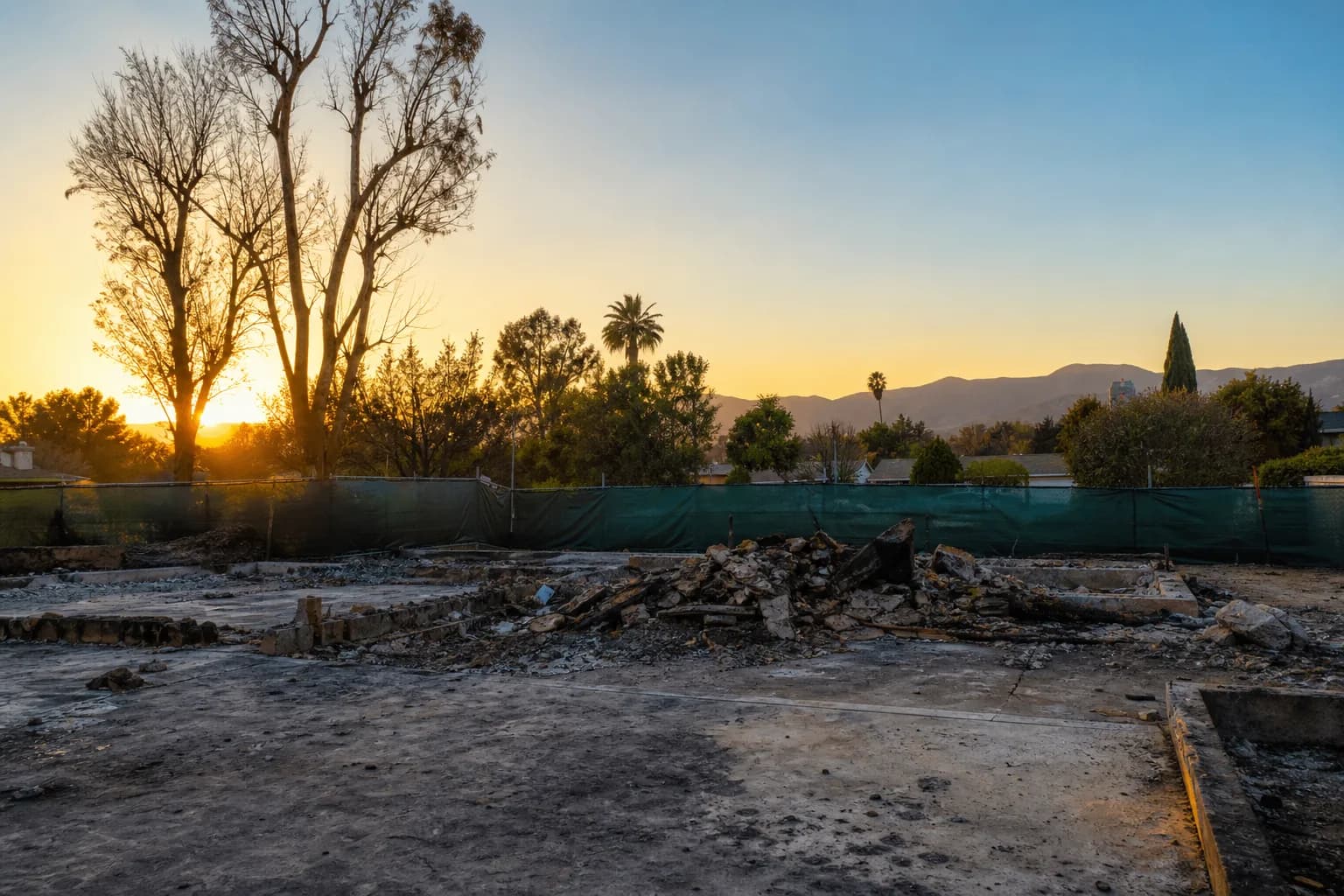
That gap is common after a total loss. Policies written years ago often tracked purchase price or a cheap replacement estimate, not current labor, materials, code upgrades, or debris removal. After a large fire, those costs move fast. Altadena and Pacific Palisades homeowners saw this after the Eaton and Palisades fires: the payout looked large on paper and still fell short of a code-compliant rebuild.
The check is not the same as the cost to rebuild. One is a policy calculation. The other is a construction estimate.
Signs the payout will not cover the rebuild
You do not have to wait until framing to find the gap. Warning signs include:
The dwelling limit is close to what you paid for the house years ago, not what a similar new home costs now.
The adjuster's scope is a room-by-room repair list for a house that is gone, not a ground-up rebuild.
The estimate uses last year's unit prices or a national average that does not match local trades.
There is little or no line for code upgrades, temporary housing, or debris removal.
Your agent cannot show how the limit was set, or the last review was more than a year before the fire.
If two of those are true, treat underinsurance as likely and get a contractor rebuild number before you spend the check.
What happens when coverage is short
The carrier pays up to the limit. They do not owe the rest just because the house cost more to replace. What you can do with the shortfall depends on the policy:
Actual cash value (ACV) pays replacement cost minus depreciation. The first check is smaller. You may recover depreciation later if you rebuild and the policy allows it.
Replacement cost pays to rebuild with like kind and quality, still capped by the dwelling limit unless you bought extra coverage.
Extended or guaranteed replacement cost can add a percentage above the limit. That helps only if you bought it before the loss and the extra still covers the gap.
A short payout does not mean you cannot rebuild. It means you need a written plan for the gap: a smaller home, phased work, savings, a construction loan, or a combination. Do not sign a rebuild contract on hope that the carrier will "make up the difference" later.
What to do next, in order
Work the claim and the rebuild as two tracks. Mixing them is how people stall for months.
Get the policy and the current dwelling limit in writing. Ask for declarations, endorsements, and whether you have extended replacement, ordinance and law, and additional living expense.
Ask how the limit was calculated. Replacement-cost estimator, square footage, or a round number from closing? That answer matters if you later dispute the limit.
Get a rebuild estimate from a contractor who builds in your jurisdiction. Not a national software printout. A number that includes demolition, permits, current-code construction, and a realistic timeline.
Compare the contractor number to the adjuster scope, line by line. Missing items are where money hides: foundations, soils, utilities, fire-hardened details, and temporary power.
Talk to the agent about what is still available. Ordinance and law, extended replacement, debris, and ALE are separate buckets. Use them. Do not assume they were already included.
Decide the house you can actually fund. Same footprint, smaller plan, or a later ADU. Clarity here is kinder than starting a design you cannot finish.
Only then lock a builder. A site visit and a written path beat a verbal "we can make it work."
How a rebuild contractor helps vs. your agent
The agent and adjuster interpret the policy. They do not bid the build. A rebuild contractor does the opposite: they price what the drawings and the lot require, then show you where the insurance scope is thin.
UBIC does not replace your agent and does not negotiate the claim for you. What we do is put a real construction number on the table, flag code and site costs the first estimate missed, and run the Fire Rebuild Program from that number so you are not managing trades while you are still fighting a payout.
If you want a first conversation about a rebuild that is already short of coverage, call Owner (Mark) at (424) 443-3571 or schedule a site visit. Office (Susan) can help with scheduling and paperwork.
Coverage tools that sometimes close the gap
These only help if they are already on the policy, or if the carrier agrees they apply:
Extended replacement cost adds a set percentage above the dwelling limit.
Ordinance or law / code upgrade pays extra to meet current building code, which after a fire is often a large share of the gap.
Debris removal is sometimes a separate limit. Removing a burned structure is not cheap.
Additional living expense does not rebuild the house, but it keeps you housed while you sort the shortfall.
There is no fast way to raise a dwelling limit after the fire. Limits are set before the loss. After the loss, the work is to collect every dollar the existing policy already owes and to design a rebuild you can finish.
Questions to ask your agent this week
What is the dwelling limit, and is it replacement cost or actual cash value?
Do I have extended or guaranteed replacement cost, and what is the cap?
How much ordinance and law coverage do I have?
Is debris removal inside the dwelling limit or separate?
When was the limit last reviewed, and what tool set it?
What do I need to submit to recover recoverable depreciation?
Write the answers down. Bring them to the site visit. A builder can only help if the coverage picture is on the table next to the estimate.
FAQ
Processquestions.
Compare a current contractor rebuild estimate to your dwelling limit plus any extended replacement or ordinance-and-law coverage. If the construction number is higher, you are underinsured for that rebuild.
The carrier pays up to the policy limits. You still have to fund or redesign the rest of the rebuild. A short payout does not create extra coverage by itself.
No. Limits are set before the loss. After the fire, the work is to collect every dollar the existing policy already owes and to plan a rebuild you can finish.
No. Your agent, adjuster, and if you hire one a public adjuster or attorney handle the claim. A contractor prices the build, flags missing scope, and runs construction once you have a funded path.
Get the declarations and endorsements in writing, then get a jurisdiction-specific rebuild estimate and compare it to the adjuster scope before you spend the check or sign a construction contract.
Extended replacement cost, ordinance-or-law / code-upgrade coverage, and a separate debris-removal limit. Additional living expense does not rebuild the house but can keep you housed while you sort the gap.